
In the B2B global trade of outdoor cooking equipment, the difference between a “retail product” and a “commercial asset” lies in the engineering tolerances. For professional importers in the USA, Europe, and Australia, a single failed weld or a warped firebox isn’t just a repair—it’s a threat to their brand reputation.
At our manufacturing facility, we have moved beyond traditional workshop methods. To meet the rigorous demands of the 2026 market, we have implemented a Precision-First Manufacturing Protocol. Here is an inside look at the engineering journey of our Stainless Steel Argentine Grills.
- The Manufacturing Lifecycle: From Raw Steel to Professional Asset

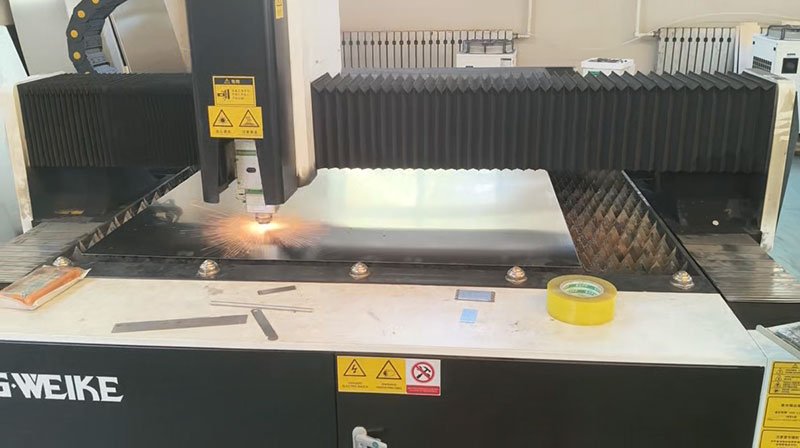
II. Phase 1: CNC Laser Precision and Material Purity
The foundation of a durable Argentine Grill is the accuracy of its components. We utilize high-power fiber laser cutting machines that maintain a tolerance of ±0.05mm.
Why it matters to B2B: Precision cutting ensures that every component in a bulk order is identical. If you are a distributor ordering 100 units, every single bolt hole and alignment point will match perfectly, facilitating easier assembly and replacement of parts for your end-users.
Spectrometer Verification: Before any sheet of steel enters the production line, it undergoes Handheld XRF Spectroscopy. We verify the Chromium and Nickel content to ensure the SS304 grade is genuine. For our partners in high-salinity markets like Australia, this is the guarantee that the product won’t rust after one season.
III. Phase 2: Structural Integrity through Advanced Welding
Argentine Grills undergo extreme thermal cycling—expanding when heated to 400°C and contracting as they cool. Inferior welding leads to structural fatigue and warping.
TIG & Robotic Welding: We use Tungsten Inert Gas (TIG) welding for critical joints to ensure deep penetration and clean, aesthetic seams. For larger structural components, eliminating human error in repetitive stress points.
Deburring & Finishing: Every edge is mechanically deburred. In a commercial kitchen, safety is paramount; we ensure there are no sharp edges that could cause injury to staff during high-speed service.
IV. Phase 3: The “Stress Test” of the Lifting Mechanism
The heart of the Argentine Grill is its height-adjustable system. In a professional steakhouse, this system may be operated 50 to 100 times per shift.
The 50kg Static Load Test: Every mechanism is tested with a 50kg static weight—double the weight of a standard meat load. We monitor for cable stretch and gear smooth-action.
Heat-Resistant Bearings: We utilize high-temperature industrial bearings that do not require frequent lubrication and will not seize under the radiant heat of the charcoal bed.
V. B2B Manufacturing FAQ
Q1: What is your monthly production capacity for Stainless Steel Argentine Grills? A: With our current automated production lines, we have a monthly capacity of 800 to 1,200 units depending on the complexity of the custom specifications. This allows us to scale quickly for large hotel tenders or seasonal stock builds for national distributors.
Q2: Can you provide a third-party Quality Inspection Report (e.g., SGS or Intertek)?
A: Certainly. We regularly host third-party inspectors on behalf of our clients.
we maintain internal QC logs for every batch, which are available for audit by our long-term B2B partners.
Q3: How do you ensure the precision of custom (OEM) designs? A: Our process begins with a 3D CAD model provided by our engineering team for your approval. Once the digital twin is confirmed, we run a “Prototype Pilot” where one unit is fully manufactured and tested for functional flaws before we initiate the main CNC programming for the mass production run.
Q4: What measures are taken to prevent surface contamination during the manufacturing process? A: We operate a dedicated Stainless Steel-only production zone. By separating stainless steel from carbon steel processing, we eliminate the risk of “cross-contamination” (carbon steel dust embedding in stainless steel), which is the most common cause of premature rusting in export products.
Q5: How are the firebricks handled during the shipping process? A: For B2B orders, firebricks are typically packed in high-density customized foam slots or shipped in separate reinforced crates to prevent breakage during transit. Our modular designs allow for easy insertion of the bricks by the end-user or the local distributor.